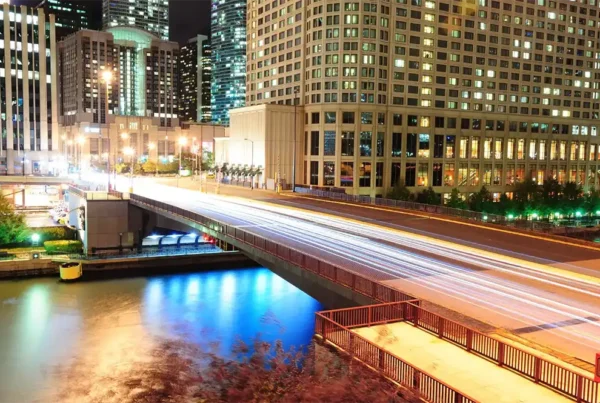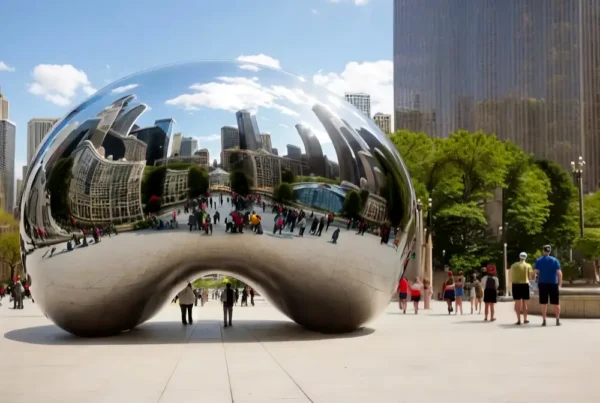
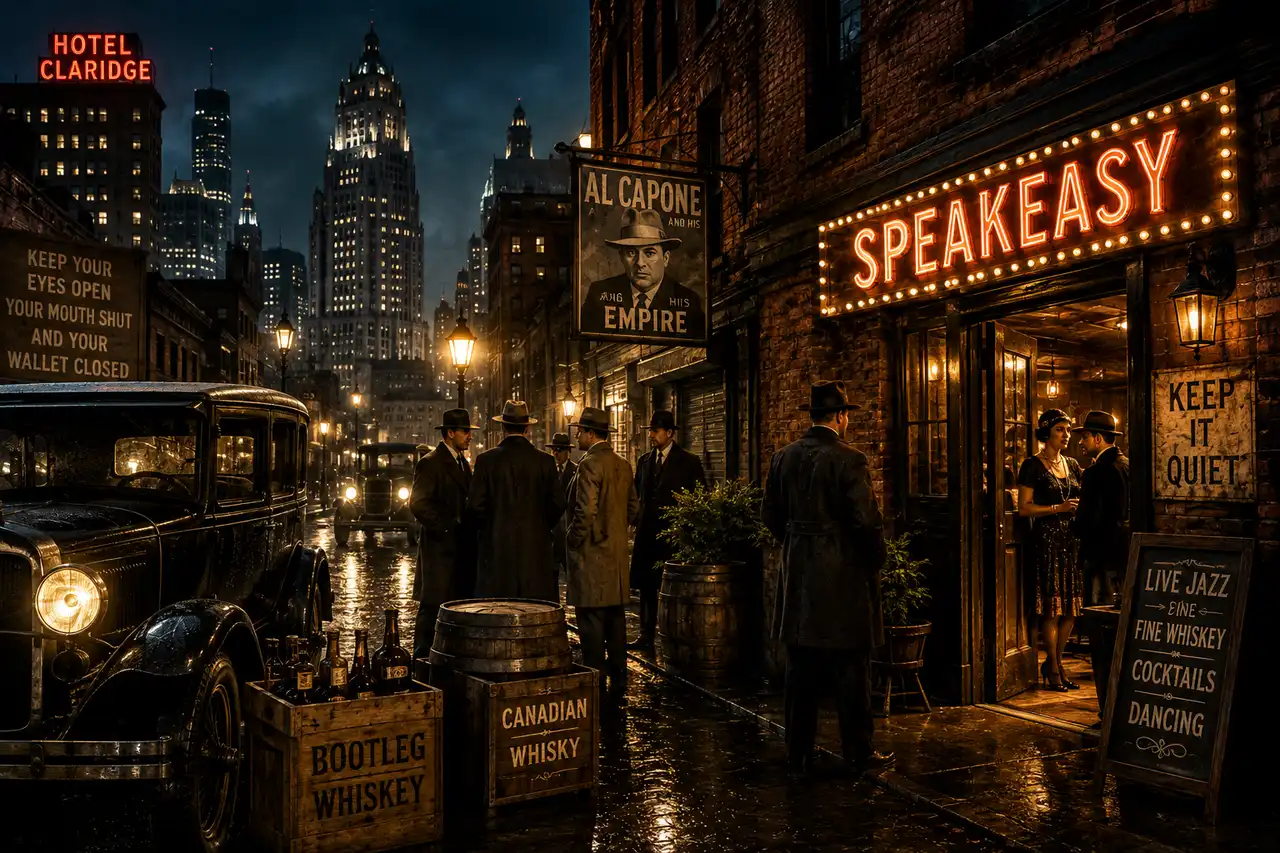
Chicago in the 1920s was a city of contradictions.
Business was booming. Jazz filled clubs. Automobiles crowded the streets. Skyscrapers continued reshaping the skyline.
And behind unmarked doors, illegal alcohol flowed freely.
Prohibition was supposed to eliminate the commercial alcohol trade.
Instead, in cities like Chicago, it created an enormous underground economy.
Bootleggers supplied the alcohol.
Speakeasies served it.
Criminal organizations fought to control it.
And figures such as Al Capone became internationally infamous.
What Was Prohibition?
National Prohibition began in 1920 after the ratification of the 18th Amendment and implementation of the Volstead Act.
The production, sale, and transportation of alcoholic beverages were prohibited under federal law.
But the desire for alcohol didn’t disappear.
That gap between law and public demand created a highly profitable illegal market.
Chicago was especially well positioned for bootlegging because it was a major transportation and commercial hub.
Organized criminal groups quickly recognized the opportunity.
What Was Bootlegging?
Bootlegging involved illegally producing, transporting, and distributing alcohol.
It became an enormous business.
Illegal alcohol could come from hidden breweries and distilleries or be transported through sophisticated distribution networks.
Running an operation at scale required money, vehicles, storage facilities, employees, protection, political connections, and customers.
Organized crime groups increasingly supplied those things.
What might have started as illegal alcohol sales developed into complex criminal enterprises.
The Rise of the Speakeasy
Once alcohol reached the city, customers needed somewhere to drink it.
Enter the speakeasy.
These illegal drinking establishments became one of the most famous symbols of Prohibition.
Some operated behind disguised entrances or in basements and back rooms. Others functioned relatively openly when owners believed they were protected from enforcement.
Chicago’s nightlife didn’t disappear because alcohol was illegal.
It adapted.
Speakeasies offered drinks, music, dancing, entertainment, and socializing.
They also provided organized crime groups with a reliable customer base.
Johnny Torrio and the Business of Crime
Before Al Capone became Chicago’s most famous gangster, Johnny Torrio played an important role in developing the criminal organization Capone would later lead.
Torrio approached illegal operations with a business mentality.
Bootlegging, gambling, and other rackets could generate enormous profits when organized efficiently.
Capone eventually inherited this increasingly sophisticated criminal network.
Al Capone Takes Control
Al Capone became the defining figure of Chicago’s Prohibition era.
Born in Brooklyn, Capone moved to Chicago and rose through the city’s criminal underworld.
After Torrio stepped away from active leadership, Capone became increasingly powerful.
His organization made money from illegal alcohol, gambling, and other rackets.
But money created competition.
Different groups wanted control over territories, customers, and distribution networks.
Violence followed.
Gang Rivalries
Chicago’s Prohibition-era criminal world wasn’t controlled by a single organization.
Multiple groups competed for influence.
Territory mattered because control over neighborhoods could mean control over speakeasies, gambling operations, and alcohol distribution.
The enormous profits available from bootlegging intensified these rivalries.
Shootings and assassinations became part of Chicago’s national reputation during the era.
The St. Valentine’s Day Massacre
The most infamous episode occurred on February 14, 1929.
Seven men connected with George “Bugs” Moran’s organization were killed inside a garage on Chicago’s North Side.
The St. Valentine’s Day Massacre shocked the public and attracted enormous media attention.
Although the crime became closely associated with the rivalry involving Capone’s organization, Capone was never convicted for the massacre.
The event nevertheless helped transform public perception of organized crime.
The glamorous gangster image increasingly gave way to outrage over violence.
How Capone Was Finally Convicted
Despite his reputation, prosecutors struggled to connect Capone directly to many violent crimes.
Authorities eventually pursued a different strategy.
Money.
Federal investigators built a case involving unpaid taxes.
In 1931, Capone was convicted of federal income tax evasion and sentenced to prison.
One of America’s most notorious gangsters had ultimately been brought down not by a murder conviction but through financial evidence.
Prohibition Ends
Prohibition lasted until 1933.
The 21st Amendment repealed the national prohibition on alcohol.
Legal alcohol returned, eliminating one of organized crime’s most lucrative markets.
But the criminal organizations that had expanded during Prohibition did not simply disappear.
Many had already diversified into gambling and other rackets.
The era left a lasting mark on Chicago’s history and popular culture.
Myth Versus Reality
Movies, television, books, and legends have transformed Prohibition-era Chicago into an almost cinematic world.
Some stories are well documented.
Others have been exaggerated through decades of retelling.
That distinction is one of the reasons the history remains so fascinating.
The real story involves much more than gangsters.
It’s also about politics, economics, immigration, law enforcement, social behavior, journalism, and the unintended consequences of public policy.