Introduction
Chicago is one of the world’s most recognized architectural destinations. Its skyline combines historic buildings, innovative skyscrapers, modern engineering, and distinctive designs that reflect more than a century of urban development.
For visitors, the city’s architecture offers more than impressive views. Each building provides clues about the people, ideas, technologies, and historical events that shaped Chicago.
The Beginnings of Chicago’s Architectural Transformation
The Great Chicago Fire of 1871 destroyed much of the city’s central area and created an urgent need for reconstruction.
The rebuilding period provided opportunities to experiment with new building materials, structural systems, and architectural styles. Chicago became an important center for architects seeking innovative ways to design taller and more functional buildings.
The city’s commercial growth increased demand for office space, encouraging the development of new construction techniques.
The Birth of the Modern Skyscraper
Chicago played an important role in the development of the modern skyscraper.
Advances in structural engineering, steel-frame construction, and elevator technology made taller buildings increasingly practical. Architects experimented with ways to combine height, functionality, and distinctive exterior designs.
The Home Insurance Building, completed in 1885, is often associated with the early development of the skyscraper, although historians continue to discuss how best to define the first modern example.
These innovations helped influence the development of tall buildings in cities around the world.
Famous Architectural Landmarks in Chicago
Willis Tower
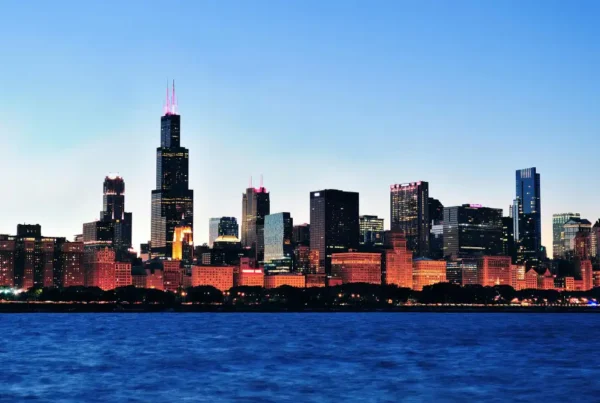
Willis Tower is one of Chicago’s most recognizable skyscrapers. Completed in 1973 as the Sears Tower, it became a defining feature of the city’s skyline and remains an important architectural landmark.
Tribune Tower
Tribune Tower is known for its distinctive Neo-Gothic design. Completed in 1925, the building reflects an era when architects used historic styles to create dramatic and memorable city landmarks.
Wrigley Building
Located near the Chicago River, the Wrigley Building is recognized for its white exterior, elegant detailing, and prominent position along Michigan Avenue.
Chicago Riverwalk
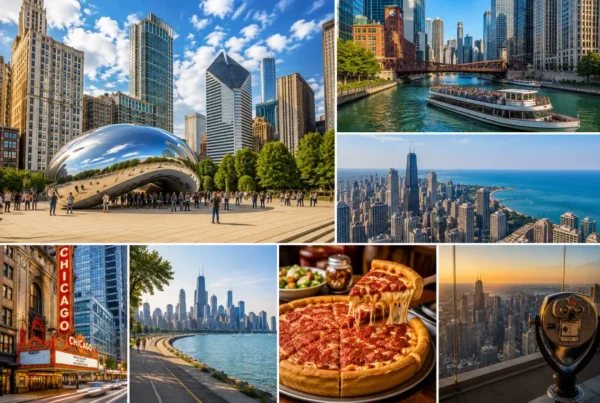
The Chicago Riverwalk provides opportunities to experience the city’s architecture from a different perspective. Visitors can enjoy views of buildings along the river and appreciate the relationship between Chicago’s waterways and urban development.
Architecture and the Identity of Chicago
Chicago’s architectural character reflects its history of rebuilding, commercial growth, cultural change, and technical innovation.
The city contains a wide variety of architectural styles, from historic structures to contemporary skyscrapers. Together, these buildings illustrate how Chicago has continually adapted to new needs and ideas.
Discover Chicago’s Architecture in Person
Seeing Chicago’s architecture in person helps visitors appreciate details that photographs may overlook. Building proportions, materials, street layouts, and riverfront views all contribute to the city’s distinctive character.
A guided sightseeing experience can help connect these architectural landmarks with the historical events that influenced their development.
Discover Chicago’s remarkable skyline and architectural heritage with Chicago Prime Tours.